The most terrifying thing about this movie is simply that I’ve heard it said, by people who would actually know, that it’s fairly faithful to the truth. Like a horror movie that weaves together just a few too many elements of verifiable and believable truth, “Precious” makes its impact because it’s not the story of one woman’s ascent above her circumstances, it’s the story of hundreds of women who deal with the same problems every single day.
Precious, or Claireece Jones for those who prefer names less steeped in irony, is an illiterate teenager in the inner city. The movie’s opening finds her pregnant, for the second time, with her own father’s child. Her mother, driven by jealousy that her own boyfriend finds her daughter more attractive, goes to any length she can to abuse Precious as vengeance for the theft her of lover’s attentions.
The balance of the plot is left as an incentive to the reader, but what struck me most potently was the mother’s blatant addiction to her own depressed way of life. On multiple occasions, she admonishes her own child that she is a “fucking idiot” and that she should “give up on that fucking school and get herself down to the welfare office.” Not only is she uneducated, but she’s also violently opposed to the idea. She is so convinced of not only her child’s worthlessness, but also her own lack of value to society, that she has no outlet but to be the object of charity. Despite this negative self-image, she manages with great skill to maneuver through the system of government to ensure her own continued support, going so far as to bring in Precious’ first child as a prop when the welfare office comes to visit.
It is difficult for me to conceive, as someone so enamored with the idea of knowledge for its own sake, of someone who looks with such disdain on something so fundamental. It is a good reminder that there is much more variety to the human condition than that we see around us each day, or even on the news. There is, below the attention of the average person, a mass of the populous that lives in hopeless desperation. Not quite homeless, but most certainly hopeless.
The movie casts Precious herself as the hero, but really I don’t think that title belongs to her. The real heroes are the people who put her up there and let her actually succeed. From her teacher to her social worker, the movie is a strong reminder of the sad fact that you can’t save people from these situations without yourself sacrificing. It’s not just about handing out money. To really make a difference someone has to sit down and sacrifice part of their lives to make the lives of others better. There is no advantageous exchange rate when it comes to human suffering. You cannot buy your way out of misery. Someone has to spend their life helping the less fortunate, protecting those who cannot protect themselves and putting things right for those who would otherwise be hopeless victims. These are the true heroes. They gave their all so the smallest and weakest among us might triumph.
Monday, December 20, 2010


Words, Strung Together, in Hopefully Pleasing Strands
Today as I pondered what I was going to make of the year 2011 (In general, my vocation is far, far too unintellectual to consume my full thought processes, so I find myself forced to ponder many things at once) and enumerating said items, it occurred to me that the one most prominent and important thing I needed to do was to simply write.
While I do try from time to time to divert myself along less analytical lines, ultimately I find that I measure my successes and failures using tried and true metrics that are as qualitatively absurd as they are quantitatively irrelevant. How many books did I finish this year? How many blog posts did I manage to publish? How many places did I go and take photos? On balance, this year was an utter failure in the realm of literature but a vast success if you measure it terms of frozen light and shadow. I look back with derision on my posts from this year. For the most part, they constitute statements of duress and misery, sad testaments to a sad person. That said, what posts I did bother to generate do continue to resonate with me. As riddled with despair as I was, I was not forsaken by the ability to turn a simple phrase into one that requires repetition of perusal just to squeeze out its very fundamental meaning. In short, I retain always my talent for making the very simple into the unnecessarily complicated.
Looking back on the year, I regret that I didn’t draw out in minute detail the events that marked the passing of 2010. I recall with great vividness laying under a Catalpa tree with a newfound friend, the grin stretching provocatively and seemingly without end from one side of my face to the other. Because I didn’t record it, all I have is scattered images and the visceral feeling of jubilance. I can still call it up in my mind, and each time recalled, it improves, but I regret that I have no relic of the day, carved from giddy, bubbling words, to look back on.
Later in the year, I found myself out west. Hundreds of photographs capture the days spent in that dusty terrain. The visuals preserved forever for as long as pixels remain pixels, but as each day passes, the feelings, the gentle caress of the desert breeze, the growing anticipation of a reunion, the energy of rising pre-dawn to find whatever is to be found, the loneliness of a desert road at night… they all fade away because they were not recorded. Someday, they will be lost to me utterly, but today… today they remain.
This is the value of the written word. This is what I have thrown away these past two years by not taking the time to record, as best I can, those things that cannot be summed up in a mere photograph. Though the cliché says that a picture should be valued as a thousand words, those words are ill chosen. Those 1000 words are cast in stone and are words of another's choosing. To really capture a time, a place, a person, you must choose those words and choose wisely. It also helps if you spell enough of them correctly that you can read them later. So it is with this regret, with this sense of indelible loss, that I resolve that I must return to those halcyon days of yesteryear when I actually wrote down what was going on. I make no promises to anyone, save to myself, that anything I write will be of even the most minor interest. In fact, I would find it exceptionally surprising if anyone DID find anything I had to write even the least bit interesting. But none the less, I find that I must write. If for no other reason than to entertain and fulfill the promise to the me of the future, who will cast his mind backwards and wonder what it was, exactly, that went through my mind. I cannot repair the rent in the fabric of my history, but I can at least begin to weave the cloth once again.
While I do try from time to time to divert myself along less analytical lines, ultimately I find that I measure my successes and failures using tried and true metrics that are as qualitatively absurd as they are quantitatively irrelevant. How many books did I finish this year? How many blog posts did I manage to publish? How many places did I go and take photos? On balance, this year was an utter failure in the realm of literature but a vast success if you measure it terms of frozen light and shadow. I look back with derision on my posts from this year. For the most part, they constitute statements of duress and misery, sad testaments to a sad person. That said, what posts I did bother to generate do continue to resonate with me. As riddled with despair as I was, I was not forsaken by the ability to turn a simple phrase into one that requires repetition of perusal just to squeeze out its very fundamental meaning. In short, I retain always my talent for making the very simple into the unnecessarily complicated.
Looking back on the year, I regret that I didn’t draw out in minute detail the events that marked the passing of 2010. I recall with great vividness laying under a Catalpa tree with a newfound friend, the grin stretching provocatively and seemingly without end from one side of my face to the other. Because I didn’t record it, all I have is scattered images and the visceral feeling of jubilance. I can still call it up in my mind, and each time recalled, it improves, but I regret that I have no relic of the day, carved from giddy, bubbling words, to look back on.
Later in the year, I found myself out west. Hundreds of photographs capture the days spent in that dusty terrain. The visuals preserved forever for as long as pixels remain pixels, but as each day passes, the feelings, the gentle caress of the desert breeze, the growing anticipation of a reunion, the energy of rising pre-dawn to find whatever is to be found, the loneliness of a desert road at night… they all fade away because they were not recorded. Someday, they will be lost to me utterly, but today… today they remain.
This is the value of the written word. This is what I have thrown away these past two years by not taking the time to record, as best I can, those things that cannot be summed up in a mere photograph. Though the cliché says that a picture should be valued as a thousand words, those words are ill chosen. Those 1000 words are cast in stone and are words of another's choosing. To really capture a time, a place, a person, you must choose those words and choose wisely. It also helps if you spell enough of them correctly that you can read them later. So it is with this regret, with this sense of indelible loss, that I resolve that I must return to those halcyon days of yesteryear when I actually wrote down what was going on. I make no promises to anyone, save to myself, that anything I write will be of even the most minor interest. In fact, I would find it exceptionally surprising if anyone DID find anything I had to write even the least bit interesting. But none the less, I find that I must write. If for no other reason than to entertain and fulfill the promise to the me of the future, who will cast his mind backwards and wonder what it was, exactly, that went through my mind. I cannot repair the rent in the fabric of my history, but I can at least begin to weave the cloth once again.
Friday, July 09, 2010
Movies: World’s Greatest Dad
If one considers the title, the lead actor (Robin Williams) and the director (Bobcat Goldthwait) one would assume that this movie is a simmering pot of tripe. And, when viewed in the whole, the story really is more closely akin to insipid garbage than it is inspired or even inspiring, but, it gains points for originality. In a nutshell, William’s son, a utter douchebag as described even by his own father, dies in an asphyxiation-related masturbation accident. In an attempt to save face for his son, Williams stages a suicide attempt and writes an accompanying note. Once the note is published, the student body, and in fact the nation, finds it so moving and relatable that the dearly departed goes from douchebag to hero. Riding the wave of acclaim and success, the father goes on to publish a fake journal on behalf of his departed son.
The subplots here are interesting. The Williams character is an aspiring author, even before his son’s death but has met with nothing except rejection. Yet once his son’s death captures public attention, suddenly his writing is acclaimed and desired. As an analytical person, this is a frustrating but realistic demonstration of the fact that art is valued not because of its content but primarily because of its source. As a person who has been told repeatedly that I should submit some of my work for publication, I realize the futility. It is the connection, the knowledge of the person behind the writing that makes it worthwhile. Anonymity is a difficult hole to write oneself out of.
The film’s conclusion demonstrates the age-old point that it is a far, far better thing to be an honest and sincere loser than a fraud. At some point, one must simply be honest with oneself and the world and “be what you is” as Zappa might say. The path that begins with deception or pretence leads only to despair. So be whatever you are, no matter how odd or unattractive. But I digress; the movie ends in triteness that I shall not perpetuate.
So overall, a very standard offering but with some depth for those who choose to look for it.
The subplots here are interesting. The Williams character is an aspiring author, even before his son’s death but has met with nothing except rejection. Yet once his son’s death captures public attention, suddenly his writing is acclaimed and desired. As an analytical person, this is a frustrating but realistic demonstration of the fact that art is valued not because of its content but primarily because of its source. As a person who has been told repeatedly that I should submit some of my work for publication, I realize the futility. It is the connection, the knowledge of the person behind the writing that makes it worthwhile. Anonymity is a difficult hole to write oneself out of.
The film’s conclusion demonstrates the age-old point that it is a far, far better thing to be an honest and sincere loser than a fraud. At some point, one must simply be honest with oneself and the world and “be what you is” as Zappa might say. The path that begins with deception or pretence leads only to despair. So be whatever you are, no matter how odd or unattractive. But I digress; the movie ends in triteness that I shall not perpetuate.
So overall, a very standard offering but with some depth for those who choose to look for it.
Sunday, July 04, 2010
Book: The Secret Life of Dust
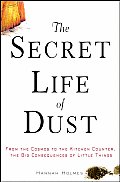
The work seems to be divided into two parts. The first third is an attempt to impress upon the reader the incredible debt that we owe to dust. The Earth, as it repeatedly points out, is comprised of dust thrown up by a hundred suns that burned fiercely and then ended their lives so that our solar system might live. This maudlin and well-established point forms the mainstay of the first 70 pages of the text. The author’s clumsy and ineffectual rendering of this rather romantic and awe-inspiring idea is a clear foreshadowing of what is to come. The latter two-thirds of the book are dedicated to the environmental impacts of particulate matter in the ecosystem. Much of this material is far from novel and well established in previous literature and the authors attempts to render this interesting to the reader can be better described as encyclopedic rather than evocative. All that said, there were a few tidbits of interest that I had not read a dozen times in a dozen previous books.
She very briefly touches on the idea that certain diatoms might have evolved to be more mobile and carried from place to place via the wind. For an ocean-going microorganism, this is a bit of a surprise to me. The concept that microscopic life evolved so that it might more easily colonize disparate environments caused me to ponder for a moment. In a way though, this concept is distasteful as it assumes a sort of “evolution with intent”. I’m not sure I entirely buy the idea that larger, flatter diatoms which can blow from place to place constitute a true evolutionary advantage. The vast majority of the environment is homogeneous so the necessity to invade costal non-oceanic waters seems vastly secondary. That said, the hallmark of evolution is that of invading every possible niche, so perhaps it makes sense.
Since she’s dealing with dust, she also deals somewhat extensively with microbes and among them the microbes which make up an ecosystem entirely of their own in clouds. Admittedly, I considered clouds to be relatively sterile places since they’re primarily composed of water vapor but the author suggests that the upper atmosphere is a rich and diverse ecosystem. It should have come as no great surprise to me that an environment rich in both water and energy should harbor life forms not familiar to us more terrestrial beings, but nevertheless is did. I think we vastly underestimate the cleverness of life on this planet or any other. She also touched with annoying brevity on the life forms present in the sub-surface water reservoirs in the Antarctic. It would be worthwhile to investigate the state of that research more closely.
Much less importantly, the book mentions a couple of random tidbits worth remembering. For example, there are locations in the middle-east and Asia in which homes can be carved from very soft volcanic ash with something as simple as a spoon. The idea of creating a domicile with a simple eating utensil is intriguing to me. Never mind that the homes are highly carcinogenic because of the minerals in the walls. Lastly, the book describes the concept of excarnation which is fascinating to me. Something deep inside me wants to be picked apart by vultures when I die.
Friday, May 21, 2010
On frivolity and its many forms
For proper context here, it may be important to note that I never had a drop of alcohol, nor set foot in a bar, nor bought alcohol until I was 35 years old. So it’s somewhat atypical given the entire span of my life that I spent several hours this evening in a bar with a motley assortment of co-workers and complete strangers. After this experience, I’m left with a decidedly wide variety of observations.
Firstly, the noise. While I agree that this was a karaoke bar and music was supposed to be front and center, I have no clue why these places have to be so intolerably loud. My ears are not trained to sort out the tiny strain of human speech among 120 decibels of Bananarama blasting away in the background so for the entire evening I’m functionally deaf. This makes it impossibly difficult to form any sort of conversational connection with anyone without screaming at the absolute top of your lungs. Not to mention, even if you CAN hear someone, the throbbing of the music is an obnoxious distraction to trying to give them proper attention. I have no doubt that half the people who addressed me this evening thought I was some horrid and inattentive lout. I could have gotten more service by far from inviting them each individually for a walk around the block and was at times tempted to do so.
Secondly, yet significantly more horrifying, I’m always humbled by the number of people who address me directly, and politely, and enthusiastically by name yet I have no clue who they are. I typically have some knowledge of where they sit in the company or what their role might be but when someone looks at me, smiles winningly and addresses me and I have no clue who I’m talking to, it’s appallingly rude in my mind and I hate little more than being rude to someone. They deserve better. This is the kind of thing that makes me want to invite the entire company out for one-on-one lunches in alphabetical order.
Lastly, and appallingly, as I looked out across the teeming masses of bar-goers, I had the revelation that some percentage of these people are making important decisions about their lives in this room. Going out and “having a good time” is a key process in human dating rituals. In fact, as I understand it anyway, the dating process often consists of little else except going out for various recreational activities including going out to a bar. In a key way, the dating couples in this alcohol-soaked and nicotine-stained establishment are forming the patterns for the rest of their lives. They’re using this venue as a part of the process by which they choose the person with whom they are going to spend the rest of their lives. Somewhat ironically, those people who are most flippantly irresponsible here and place themselves front and center on the dance floor, have an advantage over those who quietly sit back and calculate how best to word their blog-based response to the evening. The mating and selection process favors those who are wild and irresponsible. This strikes me as a terrible error.
To me, relationships at their heart are about responsibility. At the end of the day, someone has to take out the damn trash. Period. Yet the vetting processing for potential mates, consists almost entirely of recreation. Someone’s ability to sing with wild abandon while drunk, tells you little about their ability to be a responsible partner. In fact, it could be argued that the tendency to embarrass one’s self in public is inversely proportional to one’s suitability as a partner. Yet every day in social clubs all across the world, people make dating and social decisions based on entirely the wrong criterian. I’d suggest that rather than going out for fun to find a mate, perhaps we open clubs where couples can sit down and put together 1000-piece puzzles together. As the couples worked, they could slowly come to realize that in fact the pieces were from 27 different puzzles and therefore impossible to assemble. It is exactly this sort of impossible scenario that is iconic of human relationships. If the art of negotiation and compromise can be learned early on, then the rest, like learning to have fun together and relax, will come quite naturally and easily. As usual, I think we have it backwards. All the couples in bars everywhere getting to know each other should learn to work together first. Then when properly mastered, perhaps they can go out for drinks to celebrate.
Firstly, the noise. While I agree that this was a karaoke bar and music was supposed to be front and center, I have no clue why these places have to be so intolerably loud. My ears are not trained to sort out the tiny strain of human speech among 120 decibels of Bananarama blasting away in the background so for the entire evening I’m functionally deaf. This makes it impossibly difficult to form any sort of conversational connection with anyone without screaming at the absolute top of your lungs. Not to mention, even if you CAN hear someone, the throbbing of the music is an obnoxious distraction to trying to give them proper attention. I have no doubt that half the people who addressed me this evening thought I was some horrid and inattentive lout. I could have gotten more service by far from inviting them each individually for a walk around the block and was at times tempted to do so.
Secondly, yet significantly more horrifying, I’m always humbled by the number of people who address me directly, and politely, and enthusiastically by name yet I have no clue who they are. I typically have some knowledge of where they sit in the company or what their role might be but when someone looks at me, smiles winningly and addresses me and I have no clue who I’m talking to, it’s appallingly rude in my mind and I hate little more than being rude to someone. They deserve better. This is the kind of thing that makes me want to invite the entire company out for one-on-one lunches in alphabetical order.
Lastly, and appallingly, as I looked out across the teeming masses of bar-goers, I had the revelation that some percentage of these people are making important decisions about their lives in this room. Going out and “having a good time” is a key process in human dating rituals. In fact, as I understand it anyway, the dating process often consists of little else except going out for various recreational activities including going out to a bar. In a key way, the dating couples in this alcohol-soaked and nicotine-stained establishment are forming the patterns for the rest of their lives. They’re using this venue as a part of the process by which they choose the person with whom they are going to spend the rest of their lives. Somewhat ironically, those people who are most flippantly irresponsible here and place themselves front and center on the dance floor, have an advantage over those who quietly sit back and calculate how best to word their blog-based response to the evening. The mating and selection process favors those who are wild and irresponsible. This strikes me as a terrible error.
To me, relationships at their heart are about responsibility. At the end of the day, someone has to take out the damn trash. Period. Yet the vetting processing for potential mates, consists almost entirely of recreation. Someone’s ability to sing with wild abandon while drunk, tells you little about their ability to be a responsible partner. In fact, it could be argued that the tendency to embarrass one’s self in public is inversely proportional to one’s suitability as a partner. Yet every day in social clubs all across the world, people make dating and social decisions based on entirely the wrong criterian. I’d suggest that rather than going out for fun to find a mate, perhaps we open clubs where couples can sit down and put together 1000-piece puzzles together. As the couples worked, they could slowly come to realize that in fact the pieces were from 27 different puzzles and therefore impossible to assemble. It is exactly this sort of impossible scenario that is iconic of human relationships. If the art of negotiation and compromise can be learned early on, then the rest, like learning to have fun together and relax, will come quite naturally and easily. As usual, I think we have it backwards. All the couples in bars everywhere getting to know each other should learn to work together first. Then when properly mastered, perhaps they can go out for drinks to celebrate.
Thursday, May 20, 2010
Talking to the IMA
I write this particular entry not because I suspect anyone will find it particularly interesting, but because I want to save my own impressions of the day. Today I ventured off to the IMA to explore volunteer opportunities. I realized not long ago that I have FAR too much extra energy bouncing around in my skull and that giving it a direction would benefit not only my tenuous grip on sanity, but also potentially someone else as well. So I sought out somewhere to volunteer my time and energy. The first target on my list was the IMA and being only a short 6-miles and 30 minutes of insane traffic away, it was a natural fit. It also promised in some small way to allow me to vent some of the creative urge I cannot properly service at my 9-5 job… well, ok, more correctly stated, my 7-10 job, but whatever.
So as is my wont, I arrived for the interview 3 hours early. As I strolled in the front door, camera in tow, I was feeling exceptionally confident. My naïve mind reasoned that the only people who would be applying to volunteer must be old people and housewives. Among this crowd I must stand out like a shining star. (One will note that in addition to naiveté, I also have a fairly large egotistical streak.) On the way in, I passed a group of 10 doing some gardening. Once inside, I began to notice just how MANY people were involved. There seems to be, quite literally, a docent in every single room. All of them, presumably, volunteers. It was about this time that I began to realize the sheer immensity of the institution with which I had made contact and also started to feel more than a bit under-dressed.
Before I move on, one comment on the docents themselves. After speaking with my interviewer at length on this topic, the docents are surprisingly well trained and vetted. Four interviews followed by a 14-month training course to be exact. If nothing else, I respect their determination. I will admit, that they certainly are a varied lot. I spoke with one woman for a full 10 minutes about a particular work of art and she was the nicest person you could hope for. She alone added a lot to the experience of the museum just by her approachability and ability to carry on a conversation. Some of the others, however, it was difficult to coax so much as a grunt from them. These truly were the Surly Docents and they seemed little more than guards.
Docents aside, I was extremely impressed with the institution. The permanent staff number 300 with the volunteer staff approaching 400. Hopefully, they’ll find some work for me to do in the more technical areas of the museum. I should hear shortly if I’ve passed their screening process. If nothing else, I ended up with a membership to the place, so I’m incented to go back.
So as is my wont, I arrived for the interview 3 hours early. As I strolled in the front door, camera in tow, I was feeling exceptionally confident. My naïve mind reasoned that the only people who would be applying to volunteer must be old people and housewives. Among this crowd I must stand out like a shining star. (One will note that in addition to naiveté, I also have a fairly large egotistical streak.) On the way in, I passed a group of 10 doing some gardening. Once inside, I began to notice just how MANY people were involved. There seems to be, quite literally, a docent in every single room. All of them, presumably, volunteers. It was about this time that I began to realize the sheer immensity of the institution with which I had made contact and also started to feel more than a bit under-dressed.
Before I move on, one comment on the docents themselves. After speaking with my interviewer at length on this topic, the docents are surprisingly well trained and vetted. Four interviews followed by a 14-month training course to be exact. If nothing else, I respect their determination. I will admit, that they certainly are a varied lot. I spoke with one woman for a full 10 minutes about a particular work of art and she was the nicest person you could hope for. She alone added a lot to the experience of the museum just by her approachability and ability to carry on a conversation. Some of the others, however, it was difficult to coax so much as a grunt from them. These truly were the Surly Docents and they seemed little more than guards.
Docents aside, I was extremely impressed with the institution. The permanent staff number 300 with the volunteer staff approaching 400. Hopefully, they’ll find some work for me to do in the more technical areas of the museum. I should hear shortly if I’ve passed their screening process. If nothing else, I ended up with a membership to the place, so I’m incented to go back.
Tuesday, May 18, 2010
One Cup and a Million Draughts to Fill it
It is a basic human tendency to assume that we are all somehow different from everyone else; that within each of us lives a unique spark, a hidden secret need or desire that is ours and ours alone. We’re trained from the age of toddlers to think that we’re special; that there’s no one in the whole entire world who is exactly like us. This thought, no matter how buoyant it may make our youthful spirits feel, is simply wrong.
Every one of us has a cup rattling around inside. Some are full, some quite obviously empty. Some have the appearance of fullness but are no more than illusions tailored to fool the unwary. The cup represents our need to be necessary to the world or the universe around us. No more hollow feeling can smite the human soul than the thought that one’s own existence is superfluous and that nobody would notice if you were to simply vanish one day.
For a million cups, there are a million ways to fill them but not all are so obvious. Somewhere a new mother is holding her son for the first time, hot, bright, pink, vital. Her cup will be filled for a while until she begins to realize he no longer needs her. Somewhere a girl is dancing, lithe, enticing, the music pounds in rhythm to her heart. The lights reflect her fraudulent and inviting smile. Her cup is full as long as the eyes of her audience cling to her like barnacles to a storm-tossed ship. As they slip off into the night she feels empty and alone more than ever. Somewhere a man kneels in prayer, his inner voice raised up to a universe attentive, kind, eternal. His cup is filled as long as he can hold his faith in his God. Somewhere a man struts upon a stage, night after night after night as he labors for the love of his fans. The spotlights form a pillory where his weary soul slaves for the adulation of the masses. His cup is full as long as the lights are on.
Somewhere… somewhere a wiser man than all the rest, looks up at the night sky and realizes there doesn’t need to be a cup. That the desire to fill the cup is the source of the sorrow. That the true joy is merely in being alive. That the million pin-pricks in the dome of the night bring a satisfaction more calming and more lasting than any other.
Every one of us has a cup rattling around inside. Some are full, some quite obviously empty. Some have the appearance of fullness but are no more than illusions tailored to fool the unwary. The cup represents our need to be necessary to the world or the universe around us. No more hollow feeling can smite the human soul than the thought that one’s own existence is superfluous and that nobody would notice if you were to simply vanish one day.
For a million cups, there are a million ways to fill them but not all are so obvious. Somewhere a new mother is holding her son for the first time, hot, bright, pink, vital. Her cup will be filled for a while until she begins to realize he no longer needs her. Somewhere a girl is dancing, lithe, enticing, the music pounds in rhythm to her heart. The lights reflect her fraudulent and inviting smile. Her cup is full as long as the eyes of her audience cling to her like barnacles to a storm-tossed ship. As they slip off into the night she feels empty and alone more than ever. Somewhere a man kneels in prayer, his inner voice raised up to a universe attentive, kind, eternal. His cup is filled as long as he can hold his faith in his God. Somewhere a man struts upon a stage, night after night after night as he labors for the love of his fans. The spotlights form a pillory where his weary soul slaves for the adulation of the masses. His cup is full as long as the lights are on.
Somewhere… somewhere a wiser man than all the rest, looks up at the night sky and realizes there doesn’t need to be a cup. That the desire to fill the cup is the source of the sorrow. That the true joy is merely in being alive. That the million pin-pricks in the dome of the night bring a satisfaction more calming and more lasting than any other.
Monday, May 17, 2010
The Empty Cup
Here I sit, nearly half way through the year, with dangerously little to show for it. My personal projects have all stopped and started in too close a succession to have anything to show for themselves. I find myself wandering, both physically and metaphorically from purpose to purpose, seeking meaning where it is not to be found.
My mind teems with ideas and thoughts, projects yet undone rap at the entrance to my attention unceasingly yet they all ring hollow, mere phantoms which, finding themselves unattended, rise up to haunt me in the months and years that follow their birth. When time admits I make my way into the world and sometimes, for the briefest second, I can capture something of potential. Something that speaks to me months or years later. But like a wisp of smoke on a spring breeze, the inspiration is too soon scattered and inchoate.
I know this feeling. It is the vast echoing emptiness of life. The clatter of a thousand useless journeys without purpose or destination reverberate through the impossible labyrinth of my soul. The hobnail boot of despair click-clacks along the long marble hall ticking off the seconds until death finds us all finally at rest. Potential spent. Burden lifted. Debts paid.
Some say that the ancients built God from the lightning, the rain, the mountains, the epic and unspeakable, those things so far beyond our comprehension. I disagree. God was found in quiet, plodding hours of solitude. God does not live on the mountaintop; he lives in the silent despair of the empty cup.
My mind teems with ideas and thoughts, projects yet undone rap at the entrance to my attention unceasingly yet they all ring hollow, mere phantoms which, finding themselves unattended, rise up to haunt me in the months and years that follow their birth. When time admits I make my way into the world and sometimes, for the briefest second, I can capture something of potential. Something that speaks to me months or years later. But like a wisp of smoke on a spring breeze, the inspiration is too soon scattered and inchoate.
I know this feeling. It is the vast echoing emptiness of life. The clatter of a thousand useless journeys without purpose or destination reverberate through the impossible labyrinth of my soul. The hobnail boot of despair click-clacks along the long marble hall ticking off the seconds until death finds us all finally at rest. Potential spent. Burden lifted. Debts paid.
Some say that the ancients built God from the lightning, the rain, the mountains, the epic and unspeakable, those things so far beyond our comprehension. I disagree. God was found in quiet, plodding hours of solitude. God does not live on the mountaintop; he lives in the silent despair of the empty cup.
Tuesday, December 08, 2009
Random Thoughts on… [for 12/8/2009]
… Secret Santa
As expected, today’s Secret Santa went off pretty much as expected though I will admit that I’m disappointed at the depths to which some of my team has sunk this year. As I described yesterday, they wanted to make sure this didn’t happen next year so they bought intentionally uninspiring gifts. Buying a female co-worker deodorant, a stain stick and a container of Vaseline, while amusing in the company of one’s male co-workers, is asking to be poked with a very sharp stick in my book. Nonetheless, they ploughed forth unconcerned with the consequences. What is amusing to me though is the dichotomy of the participants. While half of them intentionally did nothing, the other half have really done their utmost to try to not only stay within the defined bounds of the rules but also try to be thoughtful. It’s very touching to see a male co-worker actually make an effort on behalf of someone else in the office despite the fact that they’ve been strong-armed into participating in something they really couldn’t possibly have less interest in. The real test will come at the end of the week, however, when those who didn’t try realize that by their non-participation, they’ve cheated the others. This is where we separate the truly nice people from the mere pretenders.
… Pleading the 5th.
The news reports that our White House ‘party crashers’ are taking the 5th and refusing to testify in their own case. Am I the only one who takes this as an out and out admission of guilt? I understand that the judicial process has its rules but if a defendant is in such an indefensible position that their own testimony will add more culpability to their case then it will remove, then doesn’t that lead one naturally to surmise their guilt? I sincerely wonder how many people are exonerated after refusing to testify in their own defense. If they are, then it must surely only be because they’ve eliminated the witness with the most intimate knowledge of their guilt by refusing to testify.
… Lennon, John
To paraphrase… John is dead, miss him, miss him.
As expected, today’s Secret Santa went off pretty much as expected though I will admit that I’m disappointed at the depths to which some of my team has sunk this year. As I described yesterday, they wanted to make sure this didn’t happen next year so they bought intentionally uninspiring gifts. Buying a female co-worker deodorant, a stain stick and a container of Vaseline, while amusing in the company of one’s male co-workers, is asking to be poked with a very sharp stick in my book. Nonetheless, they ploughed forth unconcerned with the consequences. What is amusing to me though is the dichotomy of the participants. While half of them intentionally did nothing, the other half have really done their utmost to try to not only stay within the defined bounds of the rules but also try to be thoughtful. It’s very touching to see a male co-worker actually make an effort on behalf of someone else in the office despite the fact that they’ve been strong-armed into participating in something they really couldn’t possibly have less interest in. The real test will come at the end of the week, however, when those who didn’t try realize that by their non-participation, they’ve cheated the others. This is where we separate the truly nice people from the mere pretenders.
… Pleading the 5th.
The news reports that our White House ‘party crashers’ are taking the 5th and refusing to testify in their own case. Am I the only one who takes this as an out and out admission of guilt? I understand that the judicial process has its rules but if a defendant is in such an indefensible position that their own testimony will add more culpability to their case then it will remove, then doesn’t that lead one naturally to surmise their guilt? I sincerely wonder how many people are exonerated after refusing to testify in their own defense. If they are, then it must surely only be because they’ve eliminated the witness with the most intimate knowledge of their guilt by refusing to testify.
… Lennon, John
To paraphrase… John is dead, miss him, miss him.
Monday, December 07, 2009
Random Thoughts on… [for 12/7/2009]
… Gather
For the past several years I’ve hung my virtual hat on Blogger and Facebook and have come to notice that while there’s a lot of inane chatter, there’s very little of actual consequence there. If I want to know about someone’s choice of toenail polish for the day (don’t get me wrong, I’m a fan of toenail polish) or what they’re having for dinner or what they happen to be watching on television, then I go to Facebook, but don’t try to hold an actual conversation there or expect whomever you happen to be speaking with to be able to spell whatever they may try to articulate. After years on Facebook, Gather has been a total surprise to me. I’ve received more reaction to my work from total strangers on Gather than I received in years from people on Facebook that I look at in person every single day. More than that though, the feedback has been intelligent, polite and helpful. This community seems to be what the internet has been missing for so many years.
That said, there’s also a dark side that’s creeping in here. Clearly, some people are just here for the points and while the point system is useful for getting things started, I believe that this mercenary attitude could well be the death of this place. Try to find a conversation on other older sites like Yahoo and you’ll find a graveyard of spambots all ceaselessly chattering at each other about the latest in male enhancement. This is the future I fear for Gather. I already see groups dedicated to spamming the system and vacuous comments from groups like the “Helping Hand” that I surmise are designed just to get points in exchange for doing nothing but leaving an inane message. I hope we choose to keep this place about “us” and not about the points.
… Secret Santas
This year our office is doing a ‘secret santa’ and since my department is 100% male, I’ve listened all week to moaning and groaning from the guys about having to get gifts for the women in our partner department that is 100% female. There’s even talk of getting the women incredibly inappropriate gifts in order to assure that this never happens again. Personally, I can’t say that I understand the objection. Sure, it can be a bit of a pain but if you don’t have a terrible attitude about it, it can be amusing enough. It's just a shame that we can't at least TRY to have a good attitude about it.
… John Barleycorn
Over a year ago I started reading this not-so-well-known Jack London novel but never quite finished due to some untimely personal drama. Yesterday I picked it up again and after having digested a small part of it, I’m just realizing again why this novel was so easy for me to relate to. Firstly, this novel is London’s bald-faced exposition of his own personal problems. He goes into excruciating and personal detail about his alcoholism and while I don’t share that issue myself, I appreciate the complete candor with which he approaches the topic. It’s unconstructive to try to hide from such things, least of all from yourself. On a more literal level, London describes in detail the process of actually becoming an alcoholic. It’s counter-intuitive to go from visceral dislike of something (alcohol is, above all else, an unpleasant beverage at its core) to NEEDING it every single day just to survive but London describes the process brilliantly and accurately. I’m in a unique position to judge this having taken my first drink at the age of 35. I remember very distinctly and adultly thinking, “How can anyone keep this down?” followed slowly over months by, “Hey, I really like this.” It is an acquired taste to be certain and London does the process great literary justice.
Message ends.
For the past several years I’ve hung my virtual hat on Blogger and Facebook and have come to notice that while there’s a lot of inane chatter, there’s very little of actual consequence there. If I want to know about someone’s choice of toenail polish for the day (don’t get me wrong, I’m a fan of toenail polish) or what they’re having for dinner or what they happen to be watching on television, then I go to Facebook, but don’t try to hold an actual conversation there or expect whomever you happen to be speaking with to be able to spell whatever they may try to articulate. After years on Facebook, Gather has been a total surprise to me. I’ve received more reaction to my work from total strangers on Gather than I received in years from people on Facebook that I look at in person every single day. More than that though, the feedback has been intelligent, polite and helpful. This community seems to be what the internet has been missing for so many years.
That said, there’s also a dark side that’s creeping in here. Clearly, some people are just here for the points and while the point system is useful for getting things started, I believe that this mercenary attitude could well be the death of this place. Try to find a conversation on other older sites like Yahoo and you’ll find a graveyard of spambots all ceaselessly chattering at each other about the latest in male enhancement. This is the future I fear for Gather. I already see groups dedicated to spamming the system and vacuous comments from groups like the “Helping Hand” that I surmise are designed just to get points in exchange for doing nothing but leaving an inane message. I hope we choose to keep this place about “us” and not about the points.
… Secret Santas
This year our office is doing a ‘secret santa’ and since my department is 100% male, I’ve listened all week to moaning and groaning from the guys about having to get gifts for the women in our partner department that is 100% female. There’s even talk of getting the women incredibly inappropriate gifts in order to assure that this never happens again. Personally, I can’t say that I understand the objection. Sure, it can be a bit of a pain but if you don’t have a terrible attitude about it, it can be amusing enough. It's just a shame that we can't at least TRY to have a good attitude about it.
… John Barleycorn
Over a year ago I started reading this not-so-well-known Jack London novel but never quite finished due to some untimely personal drama. Yesterday I picked it up again and after having digested a small part of it, I’m just realizing again why this novel was so easy for me to relate to. Firstly, this novel is London’s bald-faced exposition of his own personal problems. He goes into excruciating and personal detail about his alcoholism and while I don’t share that issue myself, I appreciate the complete candor with which he approaches the topic. It’s unconstructive to try to hide from such things, least of all from yourself. On a more literal level, London describes in detail the process of actually becoming an alcoholic. It’s counter-intuitive to go from visceral dislike of something (alcohol is, above all else, an unpleasant beverage at its core) to NEEDING it every single day just to survive but London describes the process brilliantly and accurately. I’m in a unique position to judge this having taken my first drink at the age of 35. I remember very distinctly and adultly thinking, “How can anyone keep this down?” followed slowly over months by, “Hey, I really like this.” It is an acquired taste to be certain and London does the process great literary justice.
Message ends.
Subscribe to:
Posts (Atom)